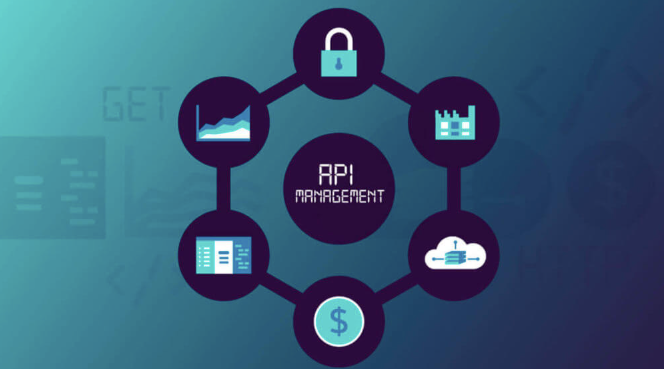
An API gateway serves as a single façade for multiple backend services, presenting a unified interface to clients. It centralizes essential functions such as authentication, rate limiting, and routing. The gateway patterns span monoliths, microservices, service mesh, and edge versus internal deployments. It helps govern access, observability, and policy enforcement while balancing latency and resilience. Deciding its fit depends on architecture, goals, and the desired balance of simplicity and control, inviting further consideration of practical steps ahead.
What An API Gateway Is and Why It Matters
An API gateway is a server that abstracts and centralizes access to multiple backend services, providing a single entry point for clients. It enables controlled exposure, consistent interfaces, and simplified evolution of ecosystems.
Subtopic mismatch and unrelated focus drop confusion, guiding design toward coherent boundaries. This clarity supports freedom by reducing coupling, clarifying responsibilities, and enabling scalable integration across diverse systems.
Centralized Functions: Authentication, Rate Limiting, and Routing
Centralized functions in an API gateway concentrate core capabilities into a single entry point: authentication, rate limiting, and routing. This structure enables consistent access control and traffic management while preserving flexibility. Authentication patterns define who can interact with services, shaping trust boundaries. Rate limiting strategies protect resources, promote reliability, and optimize performance without burdening downstream systems in everyday operations.
Gateway Patterns in Practice: Monolith-to-Microservice, Service Mesh, and Edge vs. Inside
How do gateway patterns adapt to different architectural imperatives such as monolith-to-microservice migrations, service mesh deployments, and the edge-versus-inside debate? Across these contexts, patterns and integration must harmonize with evolving topology, API contracts, and governance.
Focused on security implications, practitioners balance latency, observability, and resilience, selecting patterns that preserve reliability while enabling modular deployment and consistent policy enforcement.
How to Decide If a Gateway Fits Your Architecture and Next Steps
Deciding whether a gateway fits an architecture hinges on aligning architectural goals with gateway capabilities and organizational constraints. The analysis should emphasize topic mapping to ensure routing correctness and data fidelity, plus a clear assessment of governance, security, and scalability.
Compare vendors through a structured vendor comparison, focusing on interoperability, support, and roadmaps. Conclude with concrete next steps and an implementable action plan.
Frequently Asked Questions
How Do API Gateways Handle Blacklisting and Allowlisting IPS?
IP gateways implement allowlisting and blacklisting by evaluating incoming requests against configured IP sets. They support IP whitelisting and blacklist management, often via dynamic lists, policies, and rollback-enabled changes, enabling precise access control and rapid incident response for freedom-loving architectures.
What Are the Costs Associated With Gateway Latency?
Satirical note: API gateway latency costs loom, yet clarity emerges. The latency impact pricing scales with requests, backlogs, and features; higher throughput drives costs, while optimizations reduce spikes. Detachment observes measurable, predictable API gateway latency costs.
How Do Gateways Support Graphql Vs REST Traffic?
Gateways support GraphQL by wrapping multiple resolvers into a single schema, while REST traffic is handled via REST bundling into cohesive endpoints; both patterns optimize routing, observability, and policy enforcement for flexible, autonomous architectures.
See also: API Economy Explained
Can Gateways Replace Service Meshes Entirely?
They cannot fully replace a service mesh; gateways offer edge control, while mesh provides in-depth service-to-service behavior. The debate: gateway limitations, mesh compatibility; each serves different layers, demanding complementary rather than solitary deployment for freedom-minded architectures.
What Are Best Practices for Observability and Tracing?
Observability and tracing require disciplined practices: adopt tracing instrumentation across services, standardize spans, and avoid observability pitfalls. Instrumentation should be lightweight yet comprehensive, with centralized dashboards; governance and freedom-minded teams align on data retention and alerting thresholds.
Conclusion
In summary, API gateways unify disparate services under a single, secure facade, simplifying authentication, rate limiting, and routing while enabling consistent governance across architectures. They harmonize monoliths, microservices, and edge deployments, reducing complexity and accelerating evolution. A notable statistic underscores their impact: organizations adopting gateways report up to a 40% improvement in API reliability and a 25% reduction in operational overhead. For teams weighing architecture choices, gateways offer a scalable path toward cohesive, observable, and resilient ecosystems.