Not every multiplayer game creates a social experience.
Some games place thousands of people in the same environment but give them no reason to communicate. You may see other players running around, compete on a leaderboard, or pass through a shared world without ever forming a meaningful connection.
That is very different from a game where people cooperate, communicate, compete, laugh, improve, and remember what happened together.
The best Online Games do more than put players in the same match. They create situations that encourage interaction.
That interaction can come from teamwork, friendly competition, shared goals, player-created strategies, voice communication, or simply the feeling that another real person is responding to your decisions.
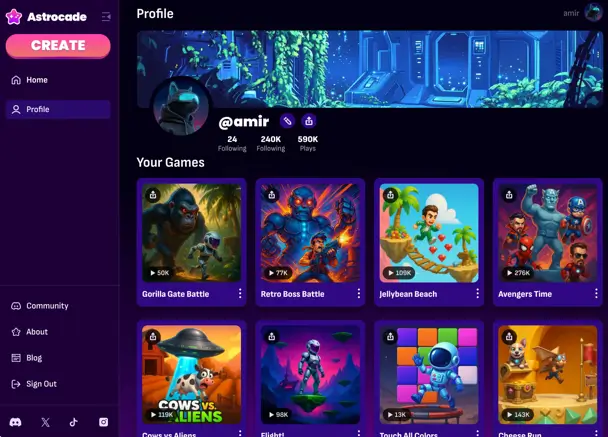
Astrocade’s current public homepage includes player-focused areas such as Players’ Choice, Trending, My Arcade, and Profile. These sections can help players discover different experiences, but direct social features still depend on the individual game.
Key Takeaways
- A multiplayer label does not automatically mean a game creates real social connection.
- Cooperative objectives are often stronger than simple shared spaces.
- Good competitive games encourage rematches, reactions, and memorable moments.
- Communication tools should support gameplay without making the experience uncomfortable.
- Leaderboards create comparison, but they do not always create relationships.
- Players should check whether a game supports multiplayer, chat, private rooms, or shared progression before expecting a social experience.
What Does It Mean to Actually Connect in a Game?
Connection does not always mean becoming close friends with another player.
In gaming, connection can happen in several ways:
- Working together toward one objective
- Learning another player’s style
- Communicating during a match
- Competing through repeated rematches
- Sharing a funny or unexpected moment
- Helping a new player understand the rules
- Recognizing familiar players over time
- Comparing strategies and improving together
The important factor is interaction.
If another player’s decisions change what happens to you, the game has more potential for connection. If everyone is simply playing alone in the same digital space, the experience may feel social on the surface but isolated underneath.
A strong social gaming platform gives players reasons to notice, respond to, and remember each other.
Cooperative Games Create the Strongest First Connection
Cooperative games are often the easiest way for players to connect because they give everyone a shared responsibility.
Instead of asking, “How do I defeat the other person?” the game asks, “How do we solve this together?”
A cooperative objective may involve:
- Protecting a shared base
- Escaping an area
- Solving a puzzle
- Completing a difficult course
- Collecting resources
- Defeating a powerful enemy
- Managing limited supplies
- Reaching a location before time runs out
Shared objectives naturally create communication.
Players may need to divide tasks, warn each other about danger, coordinate movement, or decide who should take the biggest risk. Even a short match can produce a sense of teamwork when everyone’s actions matter.
The best cooperative games do not make one player feel unnecessary. Each person should have a useful role, even if the roles are simple.
Competitive Games Can Create Connection Too
Competition is not always antisocial.
A well-designed competitive game can create strong connections through rivalry, rematches, and mutual respect. Players may begin as strangers but gradually recognize each other’s habits and strategies.
A memorable competitor is often more interesting than an anonymous opponent.
Competitive games encourage connection when they include:
- Clear and fair rules
- Short rematches
- Visible improvement
- Balanced matchmaking
- Respectful communication
- Meaningful score goals
- Different strategies
- Opportunities to recover after a loss
The key is whether the competition feels understandable.
Players are more likely to enjoy a defeat when they know why they lost and believe they can improve. They are also more likely to request a rematch when the result feels earned rather than random.
See also: Feline Kidney Disease Life Expectancy: Factors, Treatments, and Longevity Strategies
A Speed-Based Challenge to Evaluate
Speed Per Step is described as a fast-paced 3D obstacle course where the character becomes faster with every step. Players race across disappearing platforms, collect coins, unlock pets, and aim to reach 10,000 meters. The increasing speed creates escalating pressure and makes timing and movement more important as the run continues. The supplied summary describes a progression-focused obstacle experience, but it does not confirm direct multiplayer, chat, private rooms, or other player-to-player connection features. Those details should be checked before presenting it as a social multiplayer game.
Shared Goals Matter More Than Shared Space
A game can place players together without giving them a reason to interact.
For example, a shared environment may include hundreds of players, but if everyone follows separate objectives, there may be little meaningful contact. Players might see each other without helping, competing, or communicating.
Shared goals create stronger interaction because they make cooperation useful.
A player becomes more likely to speak when information matters. They are more likely to help when another person’s success affects their own outcome. They are more likely to remember someone when they solved a difficult situation together.
When evaluating a multiplayer game, ask:
- Does another player’s action affect my progress?
- Do we need to coordinate?
- Can we help each other?
- Is there a reason to communicate?
- Does the game reward teamwork?
- Can we attempt the challenge again together?
If the answer is yes, the game has a better chance of creating real connection.
Communication Should Feel Natural
Communication tools can improve a game, but only when they support the experience.
Voice chat, text chat, quick messages, emotes, and signals can help players coordinate. They can also make a simple session more entertaining.
However, communication should not feel like a requirement for basic participation.
Good systems may include:
- Simple predefined messages
- Optional voice chat
- Clear mute controls
- Private group settings
- Team indicators
- Non-verbal signals
- Easy reporting tools
- Clear player safety options
Players should be able to communicate when they want to and remain comfortable when they do not.
This is particularly important for younger players, beginners, and people who prefer relaxed sessions. A social experience should create connection without forcing unwanted exposure.
Playing With Friends Online Is Different From Playing Near Strangers
Some games are best when played with people you already know.
When you play with friends online, you already have a shared history and an existing reason to communicate. Even a simple game can become enjoyable because of jokes, rivalry, and familiar habits.
Playing with strangers can offer a different experience. It may introduce new strategies, unexpected teamwork, and the possibility of meeting someone with similar interests.
Both formats can work, but they need different features.
Games for friends may benefit from:
- Private rooms
- Invite links
- Rematches
- Shared progress
- Simple party systems
- Flexible session lengths
Games for strangers may need:
- Matchmaking
- Clear communication tools
- Moderation
- Reporting options
- Balanced skill levels
- Protection against disruptive behavior
The best social experience depends on whether the game supports the type of interaction players actually want.
Leaderboards Are Social, But Only in a Limited Way
Leaderboards can create motivation, but they are not the same as connection.
They allow players to compare scores, rankings, completion times, or achievements. This can encourage competition and give players a reason to return.
However, a leaderboard does not necessarily create communication or cooperation.
It may tell you that another player performed better, but it does not tell you who they are, how they played, or what strategy they used.
Leaderboards become more social when combined with:
- Replay sharing
- Friendly challenges
- Player profiles
- Rematch options
- Comments or reactions
- Team rankings
- Shared events
- Visible improvement history
Comparison can begin a connection, but interaction is what develops it.
Why Small Multiplayer Games Can Feel More Social
A smaller multiplayer game often has a shorter path between the player and the interaction.
There may be fewer systems, fewer distractions, and a clearer reason to respond to other players. A simple match can quickly become a conversation, rivalry, or teamwork challenge.
This is one reason some Casual games are surprisingly social.
A game does not need a huge world or a complicated progression system to make players interact. It may only need:
- A clear objective
- Short rounds
- Fair competition
- Easy communication
- A reason to play again
- A memorable moment
Small games can also be easier to explain to friends. If the rules are simple, new players can join without watching long tutorials or studying complex strategies.
How to Find Games With Real Player Interaction
When browsing Online Free Games, look beyond words such as “multiplayer” or “online.”
Read the game description and search for specific signals:
- Cooperative missions
- Team objectives
- Player-versus-player matches
- Private rooms
- Shared challenges
- Live opponents
- Chat or communication
- Friends lists
- Guilds or teams
- Multiplayer progression
If the page only says that the game is online, do not assume it includes direct interaction.
Online can mean many things. It may refer to browser access, online rankings, shared content, or real-time multiplayer. Players should confirm the exact feature before choosing a game for a group session.
Social Connection Requires Good Moderation
A game can have strong social features and still feel unpleasant if the community is poorly managed.
Toxic behavior, cheating, harassment, and disruptive communication can quickly damage the experience. Players need tools that help them control who they interact with.
Useful safety features include:
- Mute options
- Block controls
- Reporting systems
- Private matches
- Moderated chat
- Clear community rules
- Protection against unwanted invitations
- Easy ways to leave a match
Good moderation does not remove competition. It makes competition more enjoyable by keeping the environment understandable and respectful.
What Makes a Social Game Worth Returning To?
Connection grows through repeated interaction.
A single match can be fun, but a game becomes more social when players have reasons to return to the same community or group.
Useful long-term features include:
- Rematches
- Friend lists
- Team progression
- Shared achievements
- Seasonal challenges
- Community events
- Player recognition
- Skill development
- Cooperative goals
The best social games create stories.
You remember the teammate who saved the round, the opponent who kept challenging you, or the stranger who showed you a better strategy. These memories make the experience feel more meaningful than a simple score.
How Astrocade Can Help Players Discover Social Experiences
Astrocade’s current public structure gives players several discovery points, including Players’ Choice, Trending, My Arcade, and Profile. These features can help players browse different experiences and return to games they have already explored. Explore Astrocade
However, the platform’s discovery structure should not be confused with a guarantee that every title has social features.
The individual game remains important.
Before inviting friends or expecting live interaction, check whether the title supports:
- Multiplayer
- Cooperative play
- Direct competition
- Private sessions
- Chat
- Shared progress
- Player profiles
- Rematches
This approach helps players choose more accurately and prevents disappointment.
The Difference Between Being Connected and Feeling Connected
Technology can connect players technically, but design determines whether they feel connected emotionally.
A game may have live servers, player counts, and online rankings. Still, the experience may feel empty if players never need to communicate or respond to each other.
Feeling connected usually requires one or more of the following:
- Shared responsibility
- Mutual dependence
- Recognition
- Repeated interaction
- Emotional reactions
- Helpful communication
- Fair rivalry
- Common goals
The strongest games turn player presence into meaningful gameplay.
Final Thoughts
The best Online Games that help players connect do more than place people in the same digital space. They create reasons to cooperate, compete, communicate, and return.
Look for shared objectives, private sessions, fair matchmaking, rematches, communication tools, and progression that rewards teamwork or rivalry. Do not assume that every game labeled multiplayer offers the same level of interaction.
Astrocade can help players discover different game experiences through its player-focused sections, but the social features depend on each individual title.
Before choosing a game for a group session, check what kind of connection it actually supports. The right game will not only give you something to play. It will give you a reason to remember the people you played with.